Home Blog Page 10

What Does Ops Mean In Baseball

0

Have you ever heard the term “OPS” in baseball and wondered what it meant? Are you confused about how it’s calculated and what it indicates?

Baseball has many statistics and metrics used to measure a player’s performance, and OPS is one of them. It stands for On-Base Plus Slugging and has become a popular tool for evaluating a player’s offensive contributions to their team.  

Understanding OPS can give you a better understanding of a player’s overall offensive impact, beyond their batting average or the home run count. In this article, we will break down what OPS means, how it is calculated, and why it is a useful metric in evaluating a player’s offensive skills in baseball.

What Is Ops?

Ops stands for “On-base Plus Slugging” and is a statistic used in baseball to determine a player’s overall offensive performance. Ops considers a player’s ability to get on base (on-base percentage) and their ability to hit for extra bases (slugging percentage). It provides a more well-rounded view of a player’s offensive abilities.

Ops is calculated by adding a player’s on-base percentage (OBP) and slugging percentage (SLG).

OPS = OBP + SLG

On-base percentage is calculated by dividing the number of times a player reaches base (hits, walks, hit by pitch) by the number of plate appearances.

OBP = (Hits + Walks + Hit by Pitch) / (At Bats + Walks + Hit by Pitch + Sacrifice Flies)

The slugging percentage is calculated by dividing the total number of bases a player has earned (singles, doubles, triples, home runs) by the number of at-bats.

SLG = (Singles + (2 * Doubles) + (3 * Triples) + (4 * Home Runs)) / At Bats

Ops is an essential metric in baseball because it helps to measure a player’s overall offensive performance. It takes into account a player’s ability to get on base as well as their ability to hit for extra bases. While traditional statistics like batting average and home runs can be useful, they don’t provide a full picture of a player’s offensive abilities. Ops provides a more well-rounded view of how effective a player is at the plate.

Ops is also valuable in evaluating players across different eras and ballparks. Different ballparks may favor hitters or pitchers, and the way the game is played has changed over time. By using Ops, we can compare players from different eras and ballparks more accurately.

What Does Ops Mean In Baseball

Why Is Ops Important In Baseball?

Ops is an important statistic because it gives a more comprehensive picture of a player’s offensive ability than traditional statistics such as batting average, home runs, or RBIs. It takes into account a player’s ability to get on base (OBP) and hit for power (SLG), both of which are important aspects of offensive performance. Ops allows for a more accurate evaluation of a player’s overall contribution to the team’s offense.

Comparison Of Ops To Other Statistics Used To Evaluate Players:

While traditional statistics such as batting average, home runs, and RBIs are still widely used, they can be misleading when evaluating a player’s offensive performance. For example, a player with a high batting average may not necessarily be contributing much to the team if they have a low on-base percentage or slugging percentage. 

In contrast, Ops takes into account both on-base percentage and slugging percentage, providing a more complete picture of a player’s offensive ability.

Examples Of Players With High And Low Ops:

Here are some examples of players with high and low Ops:

High OPS Players:

  1. Mike Trout – Trout, the Los Angeles Angels outfielder, is considered by many to be the best player in the game today. He has a career OPS of .990, thanks to his elite skills in both on-base percentage and slugging. His on-base percentage is regularly above .400, while his slugging percentage hovers around .575.
  2. Joey Votto – Votto is a first baseman for the Cincinnati Reds and has a career OPS of .956. Like Trout, Votto’s on-base percentage is usually more than .400, while his slugging percentage stays in the high .500s.
  3. Barry Bonds (career OPS: 1.051) – Bonds is regarded by many as one of the greatest hitters of all time, with an OPS value that backs it up. His on-base percentage was regularly above .400, and he hit more than 500 home runs in his illustrious career.

Low OPS Players:

  1. Dee Gordon – Gordon, a second baseman for the Seattle Mariners, has a career OPS of .630. His on-base percentage has never gone above .332, and his slugging percentage is usually below .300.
  2. Billy Hamilton – Hamilton, an outfielder for the San Francisco Giants, has a career OPS of .644. Like Gordon, his on-base percentage struggles, and his slugging percentage is also underwhelming.
  3. Omar Vizquel – Vizquel, a former shortstop, had a career OPS of .688. Although Vizquel was known for his excellent defense, his offensive production was often lacking, with a career on-base percentage of .355 and a slugging percentage of .333.

How Is Ops Used In Baseball Strategy?

What Does Ops Mean In Baseball

A. Explanation Of How Ops Can Be Used To Create A Lineup

Ops can be used to create a lineup by identifying the players who are most likely to contribute offensively. For example, a manager might use Ops to determine the batting order, placing players with higher Ops at the top of the lineup and those with lower Ops further down. This can help ensure that the team’s best offensive players are getting the most at-bats and have the greatest impact on the game.

B. Explanation Of How Ops Can Be Used To Identify Weaknesses In The Opposing Team

Ops can also be used to identify weaknesses in the opposing team. For example, a team might target pitchers with low Ops against left-handed batters, knowing that they are more likely to struggle against hitters who have a high SLG against lefties. This can help the team create a strategy that plays to their strengths and exploits their opponent’s weaknesses.

C. Examples Of How Ops Has Been Used In Real-Life Situations

Ops has been used in real-life situations in a variety of ways. For example, in 2021, the Toronto Blue Jays signed Marcus Semien to a one-year, $18 million contract based in part on his high Ops. Semien had a career-high Ops of .887 in 2020, indicating that he was a valuable offensive player who could contribute to the team’s success.

In another example, during the 2016 World Series, the Chicago Cubs used Ops to help create their batting order. Manager Joe Maddon used the metric to identify the team’s most productive hitters, placing them in positions where they would be most likely to contribute to the team’s offense.

Criticisms And limitations Of Using Ops As A Sole Metric Of Player Value

While OPS can provide valuable insights into a player’s performance, it is not without its criticisms and limitations. Here are some factors to consider when using OPS as a sole metric of player value in baseball:

1. Ignores Other Aspects Of The Game

While OPS is a useful metric for evaluating a player’s ability to get on base and hit for power, it does not take into account other important aspects of the game, such as defense and baserunning. A player who has a high OPS but is a liability in the field or on the basepaths may not be as valuable as a player with a lower OPS who excels in these areas.

2. Biased Towards Power Hitters

OPS heavily favors players who hit for power, as slugging percentage is a significant component of the metric. This can disproportionately benefit power hitters while undervaluing players who excel in other areas, such as getting on base or utilizing speed to steal bases.

3. Doesn’t Account For Context

OPS does not consider the context in which a player accumulates their stats. For example, a player who accumulates most of their hits and home runs in low-pressure situations, such as blowout games, may have a higher OPS than a player who consistently performs well in high-pressure situations.

4. Not Effective For Comparing Players From Different Eras

OPS is not an effective metric for comparing players from different eras due to changes in the game’s rules, equipment, and playing conditions. For example, players from the “dead-ball era” of the early 20th century would likely have lower OPS values than modern-day players due to differences in the game’s equipment and rules.

Wrapping Up

Ops has become an increasingly important statistic in baseball, providing a more comprehensive measure of a player’s offensive performance than traditional statistics. By taking into account both OBP and SLG, Ops allows for a more accurate assessment of a player’s overall contribution to the team’s offense. It can be used to evaluate individual players, create a lineup, and identify weaknesses in the opposing team. As the game of baseball continues to evolve, it is likely that Ops will become even more important in helping teams evaluate and strategize their approach to the game.
How Much Can You Lose In 3 Weeks?

0

There could be an event around the corner, some picnic plans, family gatherings, or small parties lined up in a few weeks, and you want to look perfect there. And now you’re worrying and searching Google with different questions like how much weight a person can shed in 3 weeks, what can help me lose weight in 3 weeks, etc.

The most straightforward answer to how much you can lose in 3 weeks is that it’s advisable not to lose more than 06 pounds in a specific time frame. You must be expecting some more considerable number but keep in mind that your body gets used to certain body weights at a point and wants to maintain that even if it’s an unhealthy weight. At the same time, rapid weight loss can confuse your body, slowing your metabolism and resulting in negative weight gain (trusted source).

It’s better to lose weight by approaching the healthiest approach and adopting good habits to help you safely melt your weight.

Keep your aim to lose 1 to 2 pounds in a week.

Keep Your Goals Reachable

Losing 1 to 2 pounds in a week is considered a healthy approach. So if you successfully lose this weight in a week, you can lose 3-6 pounds in 3 weeks.

Losing weight varies from one person to another due to differences in body shaping, weight, and metabolism.

But the critical pointer here is not to give up and be persistent.

Track Your Calories

If you’re working hard to lose weight but still cannot feel any difference, you should work on your diet.

One of the best essential factors while losing weight can be creating a calorie deficit, resulting from burning more calories than consumed.

If you can constantly keep your body in deficit for three weeks, you will surely lose some pounds.

One pound of fat has 3500 calories, so if you’re planning to lose 1 pound per week, you have to burn 3500 kcal in seven days, or approximately 500 kcal per day.

To lose 2 pounds per week, you must keep your daily calorie deficit to 1000 calories.

Break A Sweat

Bringing a massive adjustment to your diet is yet another way to create a calorie deficit, but you don’t have to stop exercising.

Along with diet, you can include some convenient and fun exercises, for example, yoga and pilates.

Embrace Small Changes

For more extensive and better differences you need to focus on some simple tweaks such as:

  • Avoid having sugary sodas and juices; instead, take water or seltzer.
  • Completely eliminate alcohol from your diet.
  • Avoid intake of processed foods like chips etc.
  • Your primary aim should be having three balanced meals daily with one or two snacks.
  • Your meal should include all essential nutrients such as carbohydrates, protein, and fat so that your body may absorb energy and your blood sugar level remains balanced.

How To Lose Weight Fast?

Everyone who craves weight loss wants to see visible changes soon, though patience and consistency is the key while one is trying to lose weight (trusted source).

Here are some essential tips that might help you in losing weight fast:

  • Do not skip your breakfast, as it will provide you with essential nutrients you will needing throughout your day.
  • Eat regular meals during day time as it will be very helpful in burning calories.
  • Add a good quantity of fruits and vegetables to your diet as they are low in fat and calories. They are also a good source of fiber, another essential ingredient for losing weight.
  • Exercise daily to lose weight and be active.
  • Drink plenty of water throughout the day.
  • Include high-fiber food in your diet.
  • Try to read and understand the excellent label before buying, and calculate calories and everything before buying the product.
  • Try using smaller plates while eating, as it will promote less food intake. Also, eat slowly and don’t rush.
  • It’s not a good idea to ban any food from your diet; start doing portion control.
  • Avoid stocking up on junk food items like chocolate, chips, fizzy drinks, etc.; you can store healthy options for your snack cravings.
  • Alcohol contains so many calories, so avoid drinking it, especially when on a diet.
  • It’s best if you plan your diet for the whole week and then stick to it no matter what; your meal plan should strictly follow the calories allowance part.

How Much Weight Can U Lose In 3 Weeks Of Fasting?

A 2014 review shows, intermittent fasting curtailed body weight by 3–8% over 3–24 weeks (trusted source).

It means intermittent fasting can result in a weight loss of about 0.55 to 1.65 pounds.

How Much Weight Can You Lose In A Month?

Weight loss is something many of us want to do but remains very curious about the results etc.

Most people follow their weight loss journey by doing various diets such as the Keto diet, protein diets, etc., etc.

According to a CDC analysis, a person can safely lose around 1 or 2 pounds in a week which makes it around 4 to 8 pounds in a month.

How Much Weight Can You Lose In 3 Months?

A safe, healthy, and realistic approach is to lose 0.5-1% of your weight per week, which equates to around 1-2 pounds of weight loss in a week for most people.

You can expect to shed 12 to 24 pounds in three months.

However, this figure is not exact but just an estimate, instead you need to start by:

  • Setting up their primary goals
  • Talking in detail about the diet plan
  • Assessing your fitness lev
  • Figuring out the diet and activities that you enjoy doing.

It has to be kept in your mind that everyone has a different body and metabolism, so if one diet responds perfectly for someone, it’s optional that it will suit you too.

What To Avoid?

  • Don’t try to lose weight rapidly.
  • No exercise or physical activity at all
  • Leaving certain food items completely

Eating Habits

  • To lose weight or maintain it, you have to eat a diet full of healthy foods.
  • Following dietary habits are recommended to be followed by people who are on the way to a healthy diet.

Conclusion 

People are more likely to lose weight if they commit to general lifestyle changes, including improving their diet and increasing their weekly physical activity.

These changes can be helpful for a person can reach and maintain a moderate weight.

Victor Wembanyama: The Rising Star of French Basketball + (stats)

0

Victor Wembanyama is a young and talented basketball player who has the potential to be one of the best players in the world. His combination of size, skill, and intelligence make him a force to be reckoned with on the court. With his physical attributes and high basketball IQ, he will continue to improve and make a big impact in the basketball world. Read on to learn more about this talented young fella!

Victor Wembanyama: A Rising Star in Basketball

Victor Wembanyama is a rising star in the world of basketball. He is quickly becoming one of the most exciting prospects in the world of basketball.

Standing at 7’2″, the French center has drawn comparisons to some of the all-time greats of the game, including Yao Ming and Hakeem Olajuwon.

As we said, he is standing at seven feet tall, with a wingspan of over eight feet, and weighing in at 220 lbs., this 18-year-old Frenchman is dominating the court.

He has achieved impressive success with the French Under-18 national team and is currently playing for Real Madrid.

With plans to join the NBA in 2021, Wembanyama’s future looks extremely promising. Let’s take a closer look at this young phenom’s career and life off the court.

Victor Wembanyama Stats

18-year-old Victor Wembanyama is a prized young talent in French basketball with a standing reach of roughly 8 feet.

He has already proven himself to have the skill and drive necessary to take his game to the next level, having earned several accomplishments over his high school career.

Check the stats of Viktor Wembanyama:

Statistic Value
Height 7’2″
Weight 220 lbs
Age 21
Position Center
Team Real Madrid
Points per game 6.3
Rebounds per game 4.5
Assists per game 0.8
Blocks per game 1.2
Field goal percentage 56.8%
Free throw percentage 72.4%
Three-point percentage 20.0%


Please note that the current stats of the player can change over time and the values might not be accurate to this date.

His future goals include playing at an Olympic level where he could prove to be a central figure of French Basketball culture for years to come.

Fans are looking forward to seeing what potential this young player holds in store for them in the near future, as he sets his sights on achieving greatness.

Early Career Success

Wembanyama began his career at a very young age, but it wasn’t until he joined the French Under-18 national team that he started to shine.

He quickly made a name for himself as a dominant force on the court.

After impressing at the youth level, he helped lead his country to a bronze medal at the European Championships.

His performance at this tournament caught the attention of scouts from around the world, and Wembanyama soon found himself on the radar of some of the top teams in Europe.

While Wembanyama has largely been supported throughout his basketball career by his mother, his father’s presence has also been a key part of his journey.

His father was very influential in shaping the optimism and confidence Wembanyama carries on and off the court.

During his time there, he racked up some impressive stats and earned himself several awards including MVP of both the 2017 FIBA Europe Under-16 Championship and 2018 FIBA Europe Under-18 Championship.

On top of honing his skills as an elite basketball player, Wembanyama has diversified himself by building an expansive portfolio outside the sport.

Father and son have worked together on projects related to music production and technology, giving them both something to look forward to away from the hard court.

His notable achievements earned him an invitation to play for Real Madrid where he continues to demonstrate outstanding performance on the court (trusted source).

Off Court Life & Interests

Though basketball is certainly his passion, Victor has developed other interests outside of the sport as well such as music which he credits his mother for introducing him to.

His mother has been incredibly supportive throughout his journey and continues to be an amazing source of inspiration for him even as his career takes off.

Future Goals & Impact on Basketball Culture

Victor’s next big goal is to play at an Olympic level which could have a significant impact on French basketball culture.

At just 18 years old, Victor Wembanyama has already achieved so much and holds great potential for what lies ahead in his career with plans for joining the NBA in the next years.

This young player is sure to continue making waves within basketball culture as he continues to make a name for himself on and off the court!

See the video reaction of other NBA stars:

Future Star With High Basketball IQ

As we said, he stands at an imposing 7’2″, and is a rising star in the world of basketball, whose reach and agility have been praised by analysts.

But it’s not just Wembanyama’s impressive physical attributes that make him stand out on the court.

He also possesses a rare combination of skill, intelligence, and basketball IQ that sets him apart from other players his age.

He’s a very good passer, he has a good touch around the basket, and he moves well for a player his size.

His defense is also exceptional.

This impressive combination of strength and basketball IQ have allowed him to excel as a center and with no surprise, he has quickly become a favorite among team scout recruiters.

Just as impressive is his weight 220 lbs.

Often times bigger guys tend to lack in their movement but not Wembanyama who uses his superior reach skill and grace to outmaneuver defenders.

It won’t be too long before his name will become synonymous with the world of basketball accross the globe.

Recap

When it comes to achievements in his early career, few can deny that he was able to make an impact on the French Under-18 national team.

His stats and achievements speak for themselves, and with shoe size as a clear indicator of potential winning potential, it’s not surprising that he went on to have such success at an early age.

His time spent in France was full of memorable moments and will definitely be regarded as the high point of his career.

He made a remarkable decision to draft himself out of high school and move to Real Madrid, one of the top teams in Europe.

It was here that he continued to show off his skills and gain recognition for being an impressive player on the court.

His success drew attention from the NBA’s scouts and it wasn’t long before there were plans in motion for him to join the league.

He was able to make history by becoming the first player ever drafted directly out of Europe and into the National Basketball Association.

Final Thoughts

Victor Wembanyama’s journey thus far has been nothing short of inspiring!

His incredible physical attributes combined with his strong work ethic have allowed him to achieve great success on both domestic and international levels before reaching adulthood – something that truly sets him apart from other players his age!

Despite all his accomplishments, Victor remains humble and focused on continuing down this path – something that we can all strive towards!

It will be exciting to see what lies ahead for this rising star!

Types Of Pull Ups: Check the Best Variations

0

In the fitness world, few exercises command the same level of respect as the pull-up. The pull-up, often hailed as the “king of upper body exercises,” has earned its reputation for good reason. But did you know that this seemingly simple movement comes in various forms, each with its own benefits and muscle-targeting nuances?

Whether you’re striving to build a powerful back, sculpt well-defined arms, or enhance your overall upper body strength, understanding the array of pull-up variations at your disposal is key.

Get ready to explore what muscles do pull-ups work—where precision meets perseverance, and gains are forged rep by rep.

All Types of Pull-Ups and What They Work

Types Of Pull Ups

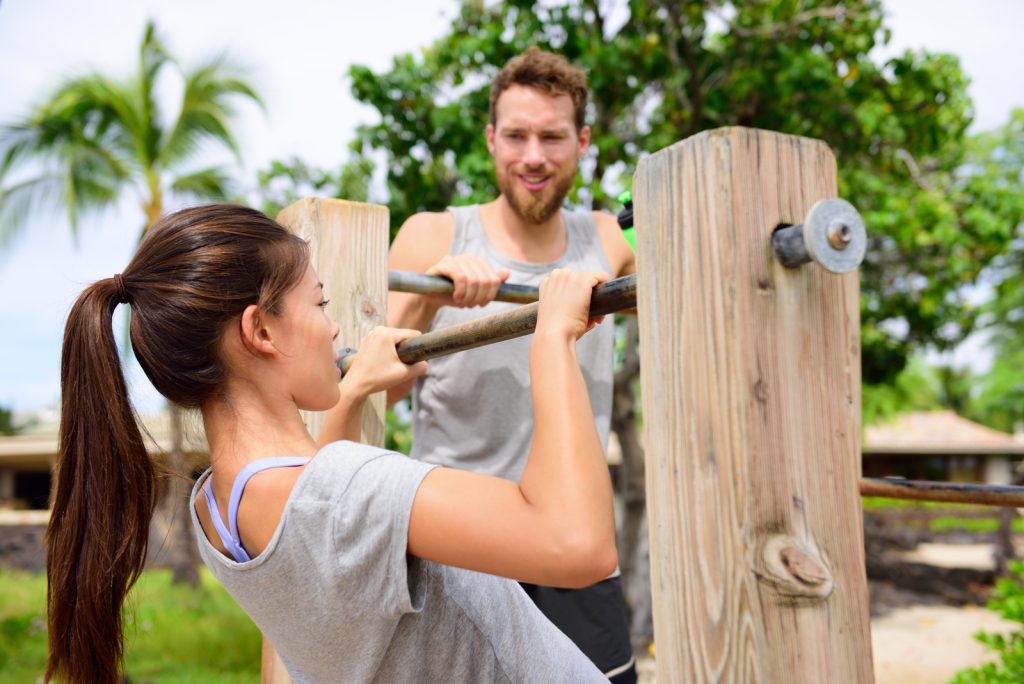
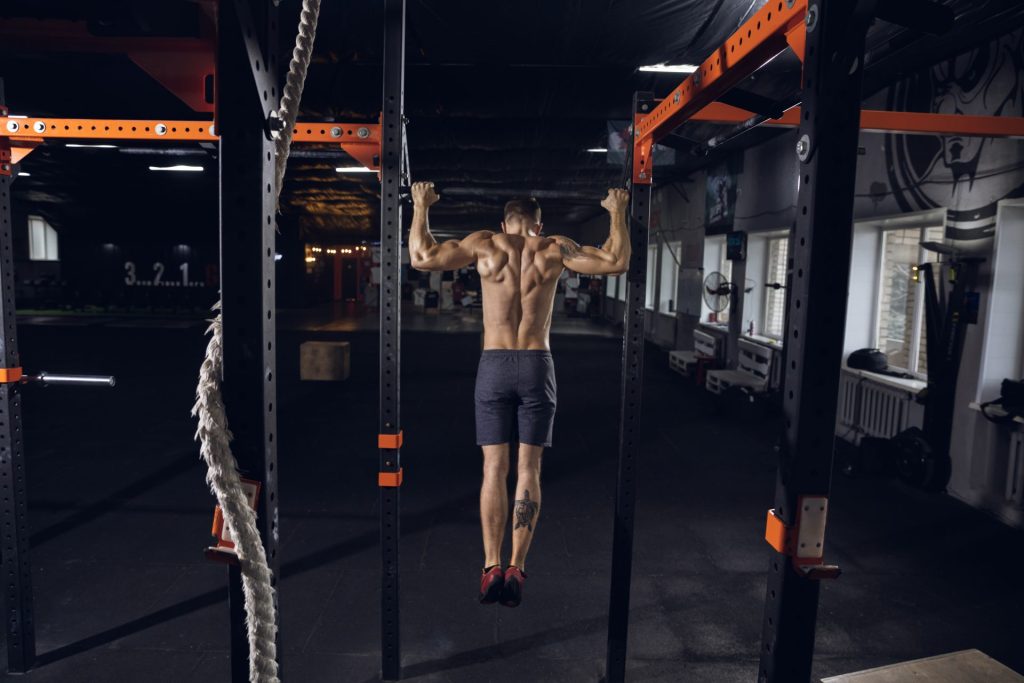
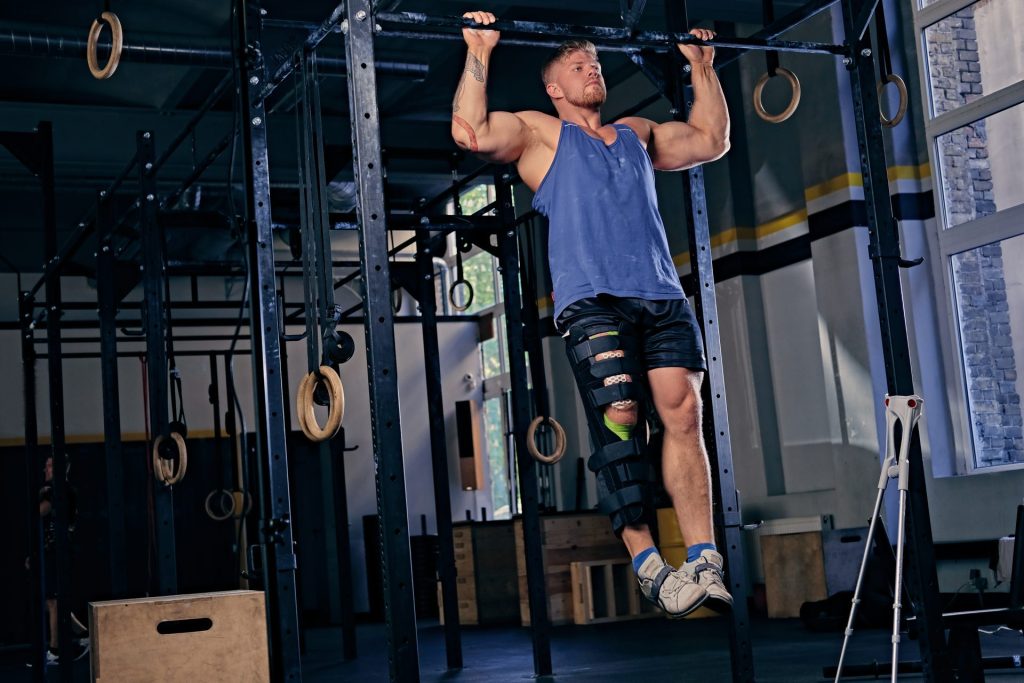
Standard Pull-Up

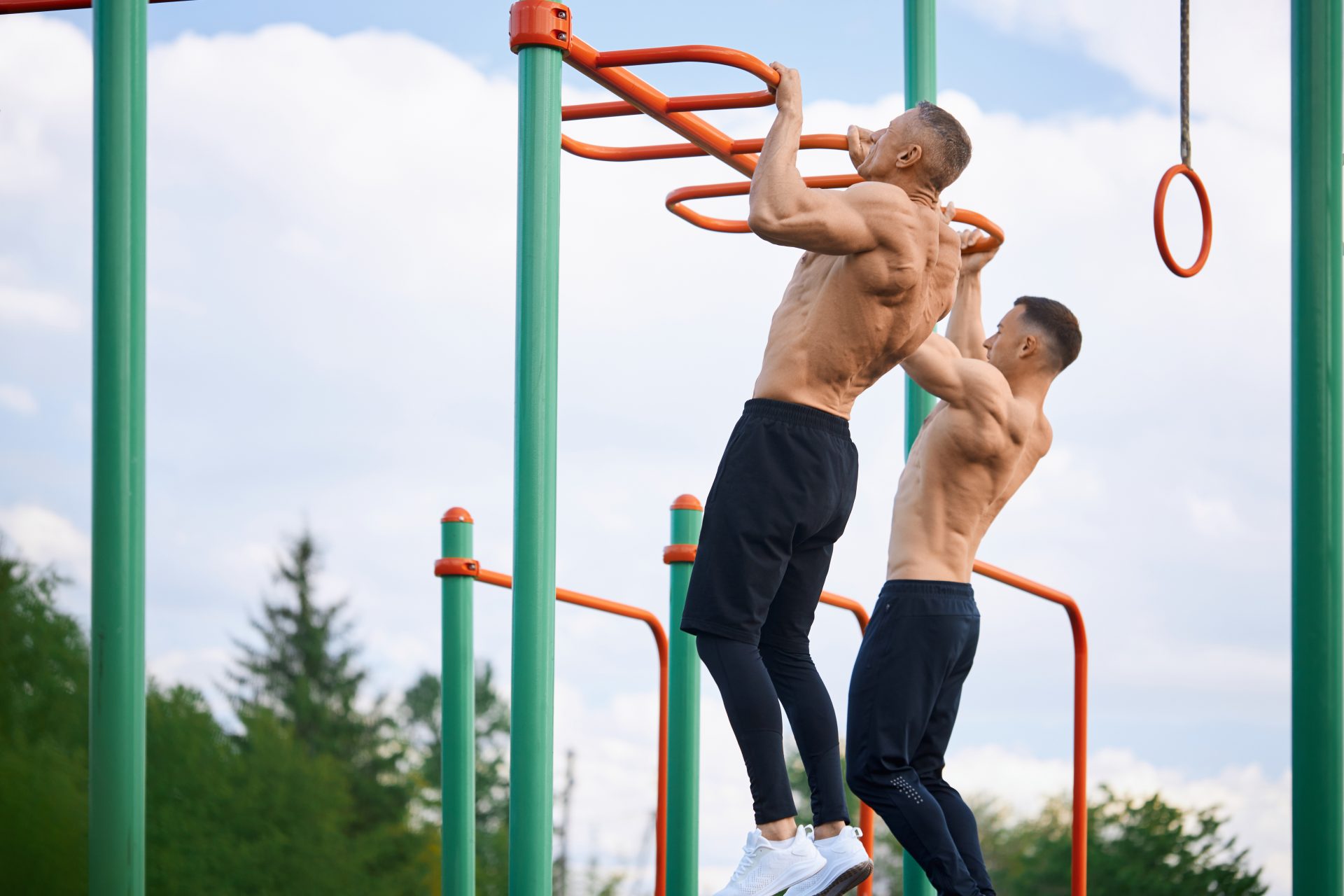
The standard pull-up is a fundamental upper body exercise that primarily engages the lats, biceps, and upper back muscles. Executed using an overhead bar, it forms the cornerstone of an effective strength training routine.

Muscles Targeted: 

  • Latissimus Dorsi (Lats): The primary muscle worked during a pull-up, the lats are responsible for the pulling motion, aiding in shoulder extension and adduction.
  • Biceps Brachii: The biceps play a significant role as secondary movers, assisting the lats in pulling the body upwards.
  • Upper Back Muscles: The rhomboids, trapezius, and rear deltoids stabilize and contribute to the movement, promoting better posture and back strength.

Proper Execution and Technique Tips

  • Grasp the overhead bar with a slightly wider than shoulder-width grip, palms facing away (pronated grip).
  • Hang fully extended, feet off the ground, and engage your core.
  • Begin the movement by retracting your scapulae (shoulder blades) and pulling your elbows down and back.
  • Continue pulling until your chin is above the bar, maintaining a controlled motion.
  • Lower your body in a controlled manner, fully extending your arms before beginning the next repetition.

Technique Tips:

  • Maintain a neutral spine throughout the movement.
  • Focus on controlled movements; avoid using momentum.
  • Breathe in as you lower your body and exhale as you pull up.
  • Engage your core to prevent excessive swinging.

Wide Grip Pull-Up

Wide Grip Pull-Up Technique

  • Start with a bar that is wider than shoulder-width apart. Grasp the bar with palms facing away (overhand grip), ensuring your hands are slightly wider than your shoulders.
  • Initiate the movement by engaging your core muscles. This stabilizes your body and prevents excessive swinging.
  • Begin the pull-up by retracting your shoulder blades. This action activates the outer back muscles, especially the latissimus dorsi.
  • Pull your body up by flexing the elbows. Focus on driving your elbows down and towards your hips to emphasize the outer back and shoulders.
  • Lower your body back down with control. Avoid letting your body drop abruptly, as this can lead to injury.

Targeted Benefits: Sculpting a V-Shaped Torso

  • The wide grip pull-up effectively isolates the outer back muscles, promoting balanced growth and definition in the latissimus dorsi.
  • This exercise places significant emphasis on the rear deltoids and the teres major, enhancing the overall width and strength of the shoulders.
  • Incorporating wide-grip pull-ups into your routine contributes to achieving a coveted V-shaped torso, accentuating the upper body’s aesthetic appeal.

Chin-Up

The chin-up is your go-to exercise if you want to sculpt stronger biceps and develop a formidable grip.

Muscles Engaged: Biceps, Lower Lats, Upper Back

  • The chin-up places significant stress on the bicep muscles, leading to enhanced size and strength over time.
  • The lower latissimus dorsi, situated along the sides of your back, plays a vital role in the pulling motion during the chin-up.
  • The exercise also targets the upper back muscles, contributing to improved overall back strength and posture.

Benefits: Mastering Biceps and Enhancing Grip Strength

  • The chin-up is a potent tool for creating well-defined biceps, enhancing your upper body aesthetics.
  • The exercise demands a firm grip, substantially improving grip strength and endurance.
  • Combining bicep and back engagement in the chin-up improves upper-body functionality and athletic performance.

Types Of Pull Ups

Commando Pull-Up

Commando Pull-Up—a dynamic exercise that targets multiple muscle groups while igniting your core and obliques. This innovative pull-up variation enhances your upper body prowess and adds a twist of core engagement for a complete powerhouse workout.

Commando Pull-Up Technique: 

  • Begin with an overhand grip on the pull-up bar; hands placed slightly wider than shoulder-width apart. 
  • Initiate the pull-up while simultaneously pulling your body toward one side, bringing one shoulder above the bar. 
  • Lower yourself while maintaining control and switch to the other side for the next repetition.
  • Alternate sides with each rep, engaging both obliques and upper body muscles.

Benefits of Core and Upper Body Development:

  • The lateral movement recruits oblique muscles, enhancing overall core stability and strength.
  • The Commando Pull-Up ensures a well-rounded development of upper body muscles, from lats and biceps to deltoids and trapezius.
  • Strengthening obliques and core muscles improves posture, balance, and performance in various physical activities.

L-sit Pull-Up

Elevate your pull-up game with the dynamic L-Sit Pull-Up—an exercise that merges upper body strength with core stability. This challenging variation isn’t just about pulling yourself up; it’s about harnessing your core power and enhancing body control.

L-Sit Pull-Up Mechanics:

  • Begin with a solid grip on the pull-up bar, hands slightly wider than shoulder-width apart.
  • Initiate the pull-up while lifting your legs to create an “L” shape with your body. Maintain a straight body line from head to toe.
  • As you reach the top of the pull, hold the L-sit position momentarily.
  • Gradually lower yourself while keeping your legs elevated.
  • Complete the repetition, ensuring controlled movements throughout.

Benefits of Core Mastery:

  • A strong core is a stable base, amplifying your pulling strength and efficiency.
  • Developing a solid core enhances your ability to maintain control during various movements, reducing the risk of injury.
  • The core is the epicenter of most movements, from lifting groceries to sprinting. A powerful core enhances performance across the spectrum.

Progression Tips: 

  • Start with partial L-sit pull-ups, lifting your legs to a comfortable height.
  • Develop core strength by practicing the static L-sit on parallel bars or the floor.
  • Gradually extend the time you can hold the L-sit position during the pull-up.
  • Include hanging leg raises, hollow body holds, and core-focused workouts to bolster your core muscles.

Archer Pull-Up

Mastering the Archer Pull-Up form offers more than just an impressive display of upper body prowess. It’s a strategic approach to building strength and mobility, focusing on addressing muscle imbalances and enhancing functional fitness. This exercise highlights disparities between your dominant and non-dominant sides, encouraging you to work towards equilibrium.

Archer Pull-Up Form:

  • Begin by grasping the pull-up bar with an overhand grip, slightly wider than shoulder-width apart.
  • Initiate the pull by engaging the shoulder blades and retracting them, pulling your body upward.
  • As you reach the top of the pull, move one hand to the side while maintaining a straight body line. The moving hand’s fingers should point forward.
  • Lower yourself while keeping tension on the moving arm, engaging the lats and other back muscles.
  • Complete the repetition and switch sides for an even workout.

Benefits of Addressing Muscle Imbalances:

  • Reducing muscle imbalances translates to more efficient movement patterns in daily activities and sports.
  • Balanced muscles decrease the risk of overuse injuries by favoring one side.
  • A well-rounded body leads to better performance in lifting, running, or other physical endeavors.

Guidelines for Progression: 

  • Begin with partial archer pull-ups, gradually increasing the range of motion as you build strength.
  • Use bands or a spotter to support the non-moving hand until you can perform the exercise unassisted.
  • Start with a moderate number of reps and gradually increase over time. Allow sufficient recovery between sessions.

Behind-the-Neck Pull-Up

Regarding advanced pull-up variations, the behind-the-neck pull-up stands out as a challenging exercise that demands superior shoulder mobility and upper back strength.

Technique Overview:

  • Grip the pull-up bar with a wide overhand grip, positioning it behind the neck.
  • Initiate the movement by pulling the body upward and raising the chin above the bar.
  • Requires exceptional shoulder mobility and upper back engagement.

Benefits

  • Enhances shoulder joint flexibility and range of motion.
  • Activates rear deltoids, rhomboids, and trapezius muscles.
  • Contributes to a balanced and strong upper body.

Towel Pull-Up

The towel pull-up introduces a new challenge, targeting grip strength and forearm development.

Mechanics of the Towel Pull-Up:

  • Drape two towels over a pull-up bar, allowing equal length on both sides. Hold onto the towels with palms facing inwards (neutral grip).
  • Engage your core and activate your latissimus dorsi muscles as you prepare to pull yourself up.
  • The towels introduce instability, demanding a stronger grip. This activates forearm muscles and stabilizes muscles in the hands and wrists.
  • Pull your body up with a controlled motion, focusing on the engagement of your lats and grip strength provided by the towels.

Grip Strength and Forearm Development: The Core Benefits

  • The unstable grip provided by the towels challenges your grip endurance, contributing to overall hand strength.
  • The towel pull-up significantly engages the forearm muscles, leading to enhanced forearm strength and definition.
  • As your grip stabilizes the towels, it promotes better hand stability and coordination.

Types Of Pull Ups

Conclusion

Pull-ups are an excellent exercise for developing upper body strength and mobility. Various variations available offer different benefits to help you reach yourfitness goals. The archer pull-up is especially useful to target muscle imbalances, while behind-the-neck pull-ups provide greater shoulder flexibility and upper-back strength. Finally, towel pull-ups are an excellent way to develop grip strength and forearm. All of these variations can be used in combination for a comprehensive upper-body workout.

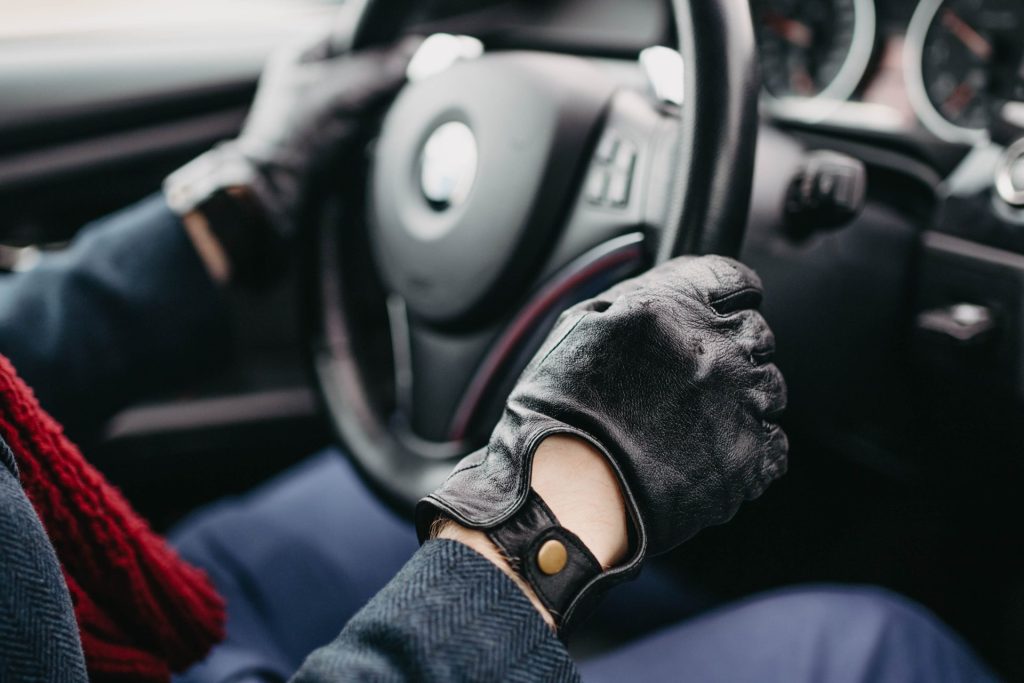
Why Do People Wear Driving Gloves? (Answer)

0

Have you ever seen someone driving with gloves on and wondered why? After all, isn’t it more comfortable to grip the wheel with bare hands?

Driving gloves have been around for decades, but their popularity has fluctuated. Some people swear by them, while others see them as unnecessary accessories.

So why do people wear driving gloves

There are several practical benefits to wearing driving gloves and some historical and cultural reasons behind their use. Whether you’re a fan of these gloves or have never worn them, this article will explore why people don them while behind the wheel.

The historical significance of driving gloves

Driving gloves have a rich history that dates back to the early days of automobiles. In the early 1900s, driving gloves were a symbol of luxury and sophistication, and they were worn by wealthy individuals who owned cars.

Over the years, driving gloves have evolved into a functional accessory that offers protection and comfort to drivers.

One of the historical significances of driving gloves is their association with motorsports. In the early days of motorsports, drivers wore gloves to protect their hands from heat and friction caused by the steering wheel.

Driving gloves also provided a better grip on the steering wheel, which was important for racing drivers who needed maximum control of their cars.

As motorsports became more popular, driving gloves became a standard accessory for race car drivers.

Another historical significance of driving gloves is their association with military aviation. During World War I, pilots wore gloves to protect their hands from cold temperatures at high altitudes.

The gloves also provided a better grip on the aircraft’s controls, which was important for pilots who needed to make quick and precise movements. As aviation technology evolved, driving gloves became a standard accessory for pilots and were worn during military and civilian flights.

Symbol of Elegance

In the 1920s and 1930s, driving gloves became a fashionable accessory for both men and women. Celebrities and socialites often wore driving gloves while driving their cars or attending social events.

The gloves were made of high-quality leather and were often embellished with decorative stitching or embroidery. Driving gloves became a symbol of elegance and sophistication and were considered a status symbol among the elite.

During the 1950s and 1960s, driving gloves became a popular accessory for men who owned sports cars. The gloves were worn while driving with the top down, and they provided protection from the wind and sun. The gloves also provided a better grip on the steering wheel, which was important for drivers navigating winding roads and sharp turns.

Driving gloves became a staple accessory for sports car enthusiasts and were often featured in advertisements for sports cars.

In recent years, driving gloves have returned to the fashion world. Many designers have created modern versions of the classic driving glove, using leather, suede, and synthetic fabrics. Driving gloves are now available in various colors and styles, from classic black leather to bright, bold colors.

Why Do People Wear Driving Gloves

Here are some of the top reasons why people wear driving gloves:

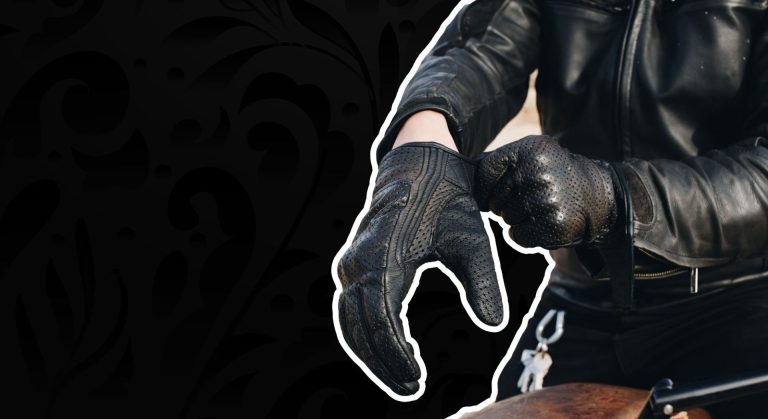
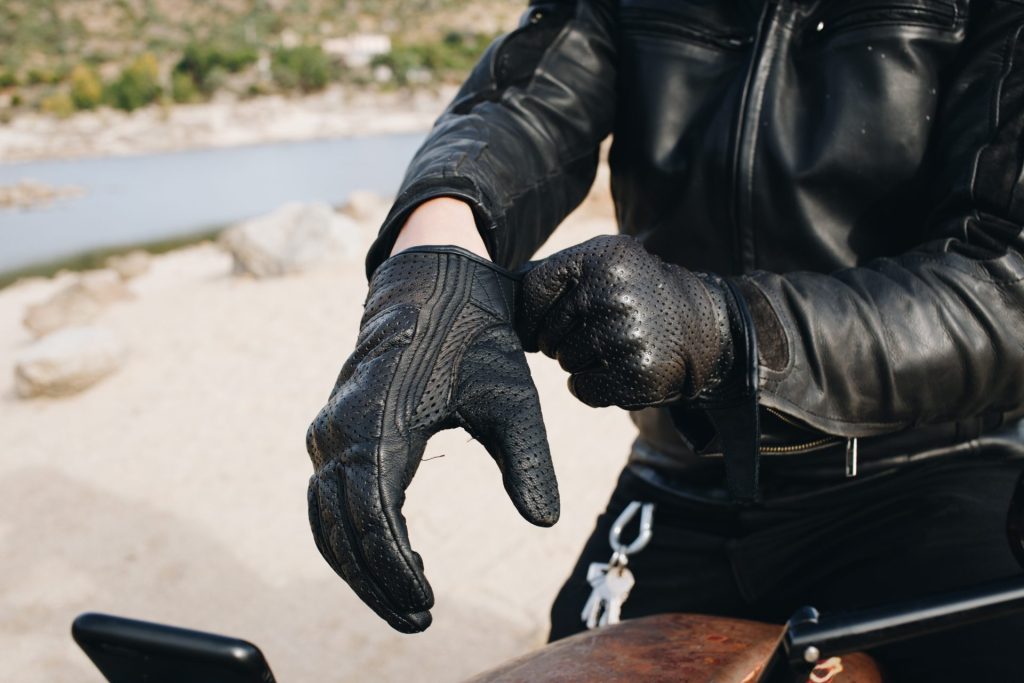
  • One of the main reasons people wear driving gloves is for protection. Driving gloves provide a barrier between the steering wheel and the driver’s hands, protecting them from the heat or cold of the wheel, as well as from any dirt or grime on it. Additionally, wearing gloves can help prevent blisters and calluses that can develop from prolonged driving.
  • Driving gloves are designed to provide a better grip on the steering wheel. They are often made from leather or other materials that are tacky to the touch, helping to prevent the hands from slipping on the wheel. This can be especially helpful when driving in wet or slippery conditions.
  • Driving gloves have long been associated with style and sophistication. Many wear them as a fashion statement, especially those who drive classic or vintage cars. The gloves can add a touch of elegance to a driving outfit and help to complete a vintage or retro look.
  • Driving gloves can provide additional comfort for drivers, especially those who spend long periods behind the wheel. The gloves can reduce fatigue and support the hands and wrists, making driving more comfortable overall.
  • Driving gloves can also help to improve the overall driving experience. The improved grip and added comfort can make it easier to control the car, especially in high-performance vehicles. Additionally, wearing gloves can help reduce the vibrations and noise from the steering wheel, making for a smoother and more enjoyable ride.
  • For some people, wearing driving gloves is a matter of health. Those with certain medical conditions, such as Raynaud’s disease, may have poor circulation and require gloves to keep their hands warm while driving. Additionally, people with sensitive skin may wear gloves to protect their hands from harsh chemicals or irritants in some car interiors.
  • Finally, some people wear driving gloves simply because it is a tradition. The gloves have been a symbol of automotive culture for over a century, and many people enjoy wearing them as a nod to the history of driving and racing.

Why Do People Wear Driving Gloves

How To Choose The Right Driving Gloves For Your Needs

When you’re behind the wheel of a car, having the right gear is essential for comfort, safety, and control. Driving gloves are one such gear that can make a significant difference in your driving experience. Not only do they offer protection to your hands, but they also enhance your grip and reduce fatigue during long drives.

However, not all driving gloves are created equal. Choosing the right gloves for your needs can be overwhelming, especially with the variety of available options. Here are some essential factors to consider when selecting driving gloves.

Purpose

The first step in choosing the right driving gloves is determining their purpose.

Are you looking for gloves for daily commuting, racing, or long-distance driving?

Different gloves serve different purposes.

If you’re a racing enthusiast, you need gloves that provide maximum grip, flexibility, and protection. Racing gloves are usually made from synthetic materials such as nylon, spandex, and neoprene, which are lightweight and flexible and have a snug fit that prevents slippage.

You need comfortable, durable gloves with adequate grip if you’re a daily commuter. Leather gloves are excellent for daily commuting as they offer durability, comfort, and grip.

They also have a stylish look that can complement your outfit.

If planning a long-distance drive, you need gloves that provide maximum comfort and reduce hand fatigue. Gloves with gel pads and extra cushioning can help reduce vibration and provide added comfort during extended periods of driving.

Why Do People Wear Driving Gloves

Material

The next factor to consider when choosing driving gloves is the material used. There are several materials to choose from, each with its benefits and drawbacks.

Leather is the most popular material used in driving gloves. It is durable, comfortable, and provides an excellent grip. Leather gloves can also protect your hands from the sun’s harmful UV rays.

Synthetic materials such as nylon, spandex, and neoprene are lightweight, flexible, and breathable. They are an excellent choice for racing gloves as they provide maximum grip and are easy to clean.

Cotton gloves are also an option, but they offer a different level of protection and grip than leather or synthetic materials.

Size

The size of the gloves is an important consideration when choosing driving gloves. Gloves that are too tight can restrict movement and cause discomfort, while too loose gloves can slip off during driving, which can be dangerous.

It’s essential to measure your hand size accurately before purchasing gloves. Most manufacturers have a sizing chart to help you determine the right size for your hand. A good rule of thumb is to choose gloves that fit snugly but allow for some flexibility and movement.

Grip

The grip is also an essential factor to consider when choosing driving gloves. A good grip can enhance your control and improve your driving experience.

Driving gloves with a non-slip grip can help prevent slippage and provide better control during steering. Leather gloves have a natural grip that provides good traction and control, while synthetic materials such as neoprene and nylon have a textured surface that offers a better grip.

Gloves with perforations or ventilation holes can also provide a better grip by reducing sweating and improving air circulation.

Style

While style may not be the most critical factor when choosing driving gloves, it’s still an important consideration. Driving gloves come in various styles and colors, and choosing a pair that complements your outfit can add a touch of elegance and sophistication.

Leather gloves are usually available in classic black, brown, and tan colors, while synthetic materials are available in various colors and patterns.

Weather

The weather conditions in your area should also influence your choice of driving gloves. If you live in a cold region, you may need gloves that provide warmth and insulation. On the other hand, if you live in a hot region, you may need gloves that offer ventilation and breathability.

Brand

The brand of the gloves is another factor to consider. There are many brands of driving gloves in the market, each with unique features and quality. You should choose a reputable brand with a history of producing quality driving gloves. Read reviews and ask for recommendations from other drivers to help you choose the right brand.

Different Types Of Driving Gloves

Several types of driving gloves are available on the market, each with unique features and benefits. Here are some of the most common types of driving gloves:

Full-fingered gloves

Full-fingered driving gloves are the most common type of driving gloves. They cover the entire hand and offer maximum protection against wind, rain, and sun. Full-fingered gloves also provide a better grip on the steering wheel and reduce hand fatigue during long drives.

Fingerless gloves

Fingerless driving gloves are a popular choice for drivers who want to maintain a better grip on the steering wheel while still having some protection for their palms. Fingerless gloves also allow for better ventilation, which can be beneficial during warm weather.

Gauntlet gloves

Gauntlet gloves are longer driving gloves extending past the wrist and onto the forearm. They offer additional protection against the elements, especially wind, and can support the wrists.

Racing gloves

Racing gloves are designed specifically for motorsports and provide maximum protection for the hands and wrists during high-speed races. They are often made from fire-resistant materials, and feature reinforced padding in critical areas.

Leather gloves

Leather driving gloves are a classic choice that offers both style and functionality. They are durable and comfortable and grip the steering wheel well. Leather gloves come in various styles and colors, from classic black to bold colors and patterns.

Synthetic gloves

Synthetic driving gloves are made from neoprene, polyester, or nylon. They are often more affordable than leather gloves and can provide good grip and protection from the elements.

Touchscreen gloves

Touchscreen driving gloves are designed with conductive materials that allow drivers to use their smartphones or other touchscreen devices without removing their gloves. These gloves can be either full-fingered or fingerless and are great for drivers who need to stay connected while on the road.

Wrapping Up

People wear driving gloves for various reasons such as to improve their grip on the steering wheel, protect their hands from the sun or cold weather, reduce vibration and fatigue, and enhance their driving experience. Additionally, driving gloves have become a fashion statement for many car enthusiasts and are seen as a symbol of luxury and sophistication. Whatever the reason may be, wearing driving gloves can provide comfort, safety, and style while on the road.

Why Are My Arms So Skinny? + (Proven Solutions)

0

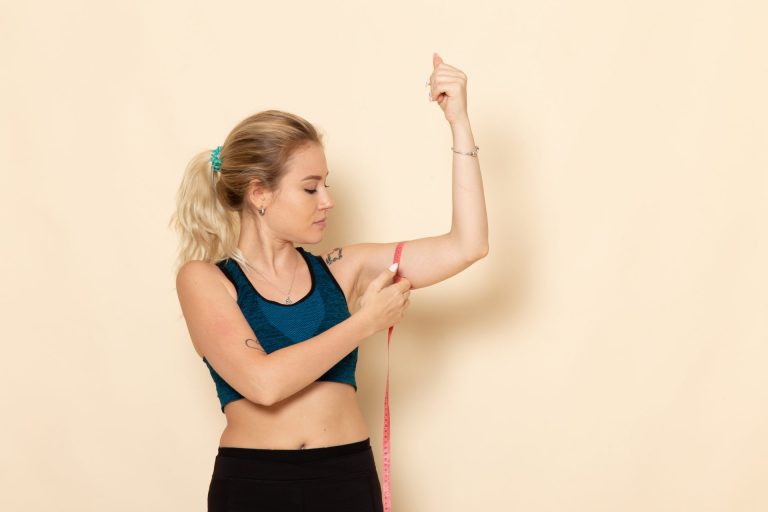
Do you stare at your arms in the mirror, wondering why they seem so skinny compared to the rest of your body? You’re not alone. Many people struggle with having slim arms and wonder why they haven’t been able to achieve the defined muscles they desire. In this blog post, we’ll explore why your arms may be skinny and provide some scientific insights into how you can overcome this challenge. 

You’ll gain the strong, muscular arms you’ve always wanted by addressing the underlying factors and implementing effective strategies. So, let’s dive in and uncover the truth behind your skinny arms!

Understanding Skinny Arms

When we talk about “skinny arms,” we refer to arms that lack muscle mass and appear slender or thin. Several factors contribute to arm size, including genetics, metabolism, and body composition.

  • Genetics plays a significant role in determining our bodies’ natural shape and size, including our arms. Some individuals may have a genetic predisposition to naturally thinner arms, making developing significant muscle mass in this area more challenging.
  • Additionally, metabolism plays a role as it affects how efficiently our bodies build and maintain muscle. Those with a faster metabolism may struggle to bulk up their arms, whereas those with a slower metabolism may find it easier to increase muscle mass.
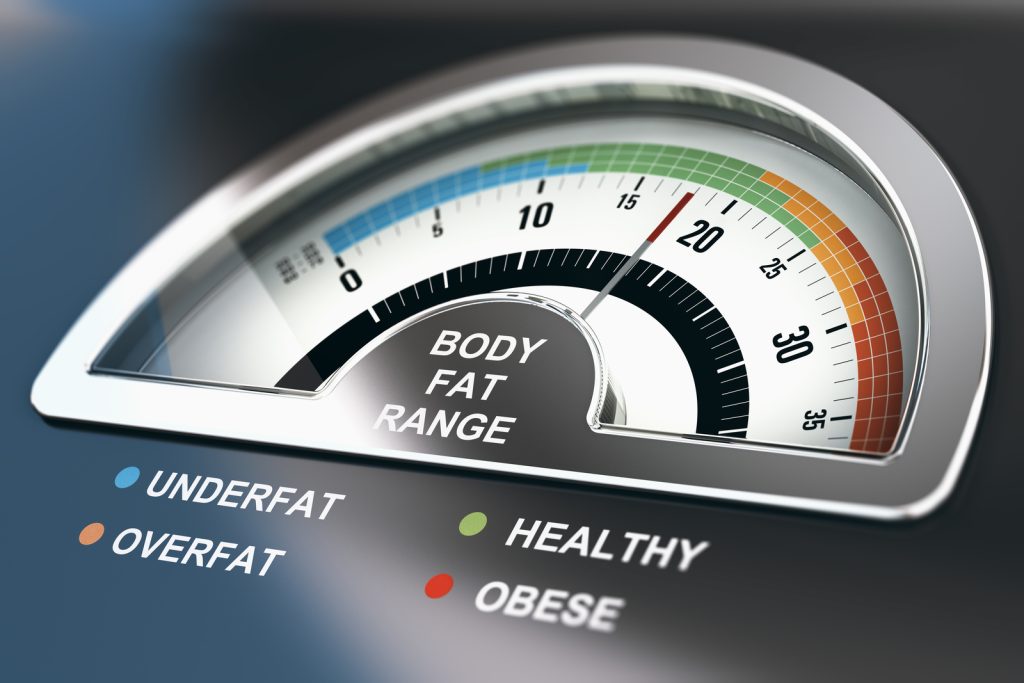
  • Another crucial factor in arm size is body composition. It refers to the body’s proportion of muscle, fat, and other tissues. Individuals with a higher percentage of body fat may have less visible muscle definition in their arms, making them appear thinner. Conversely, individuals with a lower body fat percentage may have more defined and muscular arms. Therefore, achieving more substantial and muscular arms often involves reducing body fat through diet and exercise.

Why Are My Arms So Skinny

Muscle Fiber Types Matter

Muscles are composed of different types of muscle fibers with varying capabilities for strength and endurance. Broadly categorized as Type I (slow-twitch) and Type II (fast-twitch) fibers, these fibers are pivotal in dictating our muscle’s size and function.

  • Type I Muscle Fibers: These fibers are associated with endurance activities and high fatigue resistance. They’re responsible for maintaining posture and performing activities like long-distance running.
  • Type II Muscle Fibers: These fibers are divided into Type IIa and Type IIb. Type IIa fibers have a balanced capacity for endurance and strength, while Type IIb fibers provide rapid bursts of power and strength but fatigue quickly.

Individuals with predominantly Type I fibers may find it challenging to develop significant muscle mass, especially in their arms. However, targeted strength training can stimulate Type II fibers, leading to muscle growth.

Hormones and Muscle Growth

Hormones play a pivotal role in muscle growth and development. Testosterone, in particular, profoundly impacts muscle mass, strength, and size. Higher testosterone levels promote protein synthesis, crucial for muscle repair and growth. While both men and women have testosterone, men typically have higher levels, which can contribute to their greater muscle mass compared to women.

It is important to address the misconception that solely focusing on arm exercises will guarantee muscular arms. While targeted exercises can help strengthen and tone the muscles in the arms, they alone are not enough to achieve significant muscle growth.

Building muscle requires a comprehensive approach that includes a balanced diet, overall strength training, and a focus on progressive overload. Progressive overload refers to gradually increasing workouts’ intensity, volume, or difficulty to stimulate muscle growth over time.

Individuals can promote overall muscle development, including in the arms, by incorporating compound exercises that engage multiple muscle groups, such as squats or deadlifts. Taking a holistic approach to fitness and considering overall body composition is key to achieving muscular arms.

Why are my Arms so Skinny Compared to the Rest of my Body

Inadequate Nutrition: 

Proper nutrition is essential for muscle growth and development. Lack of sufficient protein, essential fatty acids, and other key nutrients can hinder muscle growth and result in underdeveloped arm muscles.

Sedentary Lifestyle: 

A lack of physical activity and exercise can lead to muscle atrophy, including the muscles in your arms. When you lead a sedentary lifestyle, your muscles do not get the necessary stimulation to grow and strengthen.

Poor Workout Routine: 

Incorrect exercises or insufficient resistance can contribute to underdeveloped arm muscles. If your workout routine does not specifically target the muscles in your arms or if you are not challenging them with adequate resistance, they may not grow and develop as much as you desire.

Hormonal Imbalances: 

Hormones play a crucial role in muscle growth and development. Imbalances in hormones such as testosterone and growth hormone can negatively impact muscle growth, including the muscles in your arms.

Medical Conditions: 

Certain medical conditions can affect muscle mass and result in underdeveloped arm muscles. Conditions such as muscular dystrophy,catabolic illnesses, and malabsorption disorders can hinder muscle growth and development throughout the body, including the arms.

To address underdeveloped arm muscles, consulting with a qualified healthcare professional or a certified fitness trainer is essential. They can help determine the specific cause of your skinny arms and develop a tailored plan to improve muscle growth and development in the arms through proper nutrition, exercise, and potentially medical interventions if necessary.

How To Get Bigger Arms: Workout Routine

Warm-Up Routine: 

Before diving into the intense workout, it’s essential to warm up your muscles to prevent injuries and optimize performance. Start with light cardio exercises, such as jogging or jumping jacks, for 5-10 minutes.

Then, focus on dynamic stretches that target your arms, such as arm circles, tricep stretches, and wrist rotations.

Why Are My Arms So Skinny

Compound Exercises for Overall Arm Development:

To achieve well-rounded arm growth, you must incorporate compound exercises that simultaneously engage multiple muscle groups. Here are three must-do compound exercises:

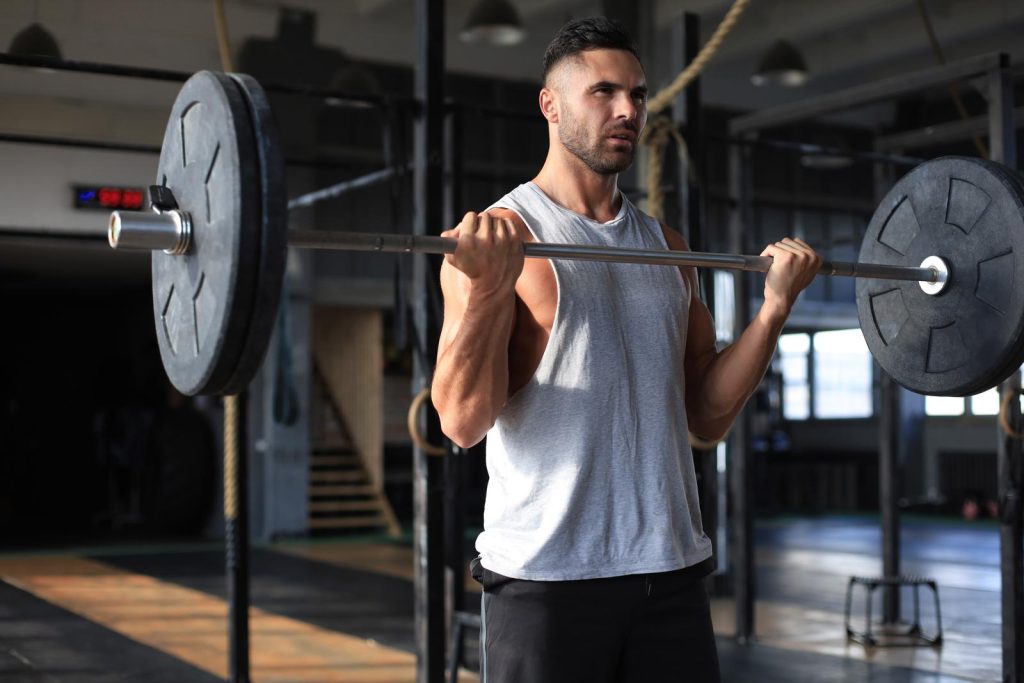
Barbell Bicep Curls:

  • Keeping your upper arms stationary, curl the barbell towards your shoulders, contracting your biceps.
  • Lower the barbell down slowly and repeat for the desired number of repetitions.
  • Aim for 3 sets of 8-12 reps.

Close-Grip Bench Press:

  • Lie flat on a bench, gripping the barbell with your hands shoulder-width apart.
  • Lower the barbell slowly to your chest, keeping your elbows close to your body.
  • Push the barbell back up to the starting position, fully extending your arms.
  • Perform 3 sets of 8-12 reps.

Dips:

  • Position yourself on parallel bars with your arms extended and palms facing inward.
  • Lower your body by bending your elbows until your upper arms parallel the ground.
  • Push yourself back up to the starting position using your triceps.
  • Complete 3 sets of 8-12 reps.

Isolation Exercises for Targeted Arm Growth:

To truly focus on each muscle group, isolation exercises are key. Incorporate the following exercises into your routine:

Concentration Curls:

  • Sit on a bench with a dumbbell in one hand, resting your elbow on your thigh.
  • Slowly lower the dumbbell and repeat for the desired number of reps.
  • Aim for 3 sets of 10-15 reps per arm.

Tricep Pushdowns:

  • Stand facing a cable machine with a rope attachment at chest level.
  • Grip the rope with both hands, palms facing downward.
  • Push the rope down while keeping your upper arms stationary until your arms are fully extended.
  • Slowly return to the starting position and repeat for 3 sets of 10-15 reps.

Why Are My Arms So Skinny

Progressive Overload:

To keep challenging your muscles and fostering growth, it’s crucial to overload your arms with increasing resistance progressively. Gradually increase the weight you use for each exercise as you get stronger. Aim for a weight that allows you to complete the designated number of reps with proper form but challenges you in the last few repetitions.

Rest and Recovery:

Remember, muscle growth happens during rest, not during the workout itself. Give your arms adequate rest between workouts to avoid over-training. Aim for at least 48 hours of recovery time between arm-focused sessions.

Wrapping Up 

The quest for bulkier arms is a journey that requires understanding, patience, and commitment. Genetics may set the stage, but your actions determine the outcome. By applying the proven solutions mentioned in this article, you’ll be well on your way to building the muscular arms you’ve always wanted.

So, next time you ask, “Why are my arms so skinny?” remember that you can achieve your desired results with the right approach, dedication, and a touch of science.

Best Renegade Row Alternatives – (TOP 5)

0

Renegade rows are a few exercises that give maximum results in minimum time and equipment. All you need is a pair of dumbbells, and with renegade rows, you can build a strong core and back. However, it may not be everyone’s cup of tea.

It requires a certain fitness level to perform this exercise efficiently, and a beginner may be unable to renegade rows. Also, individuals with lower or upper back injuries may find it difficult. Renegade rows require your body to maintain a stable balance, which isn’t possible for many people.

That’s why, in this article, we are going to discuss the five best renegade rows alternatives that offer similar benefits while allowing you to focus on your stability.

Let’s dive in.

What is the Renegade Row?

For people who are not familiar with renegade rows, let’s discuss it briefly.

The renegade row is a compound exercise focusing on your core, back, and shoulders.

It is challenging because of the plank position and the requirement for good balance and control.

How to Do a Renegade Row?

Are you wondering how to do a renegade row? Here’s a precise explanation of doing a renegade row:

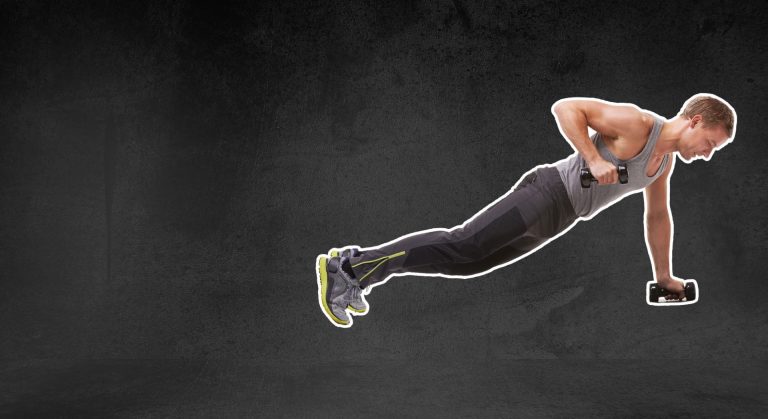
This full-body exercise requires you to go into a plank position while using one hand and lift a dumbbell in the other hand.

Benefits of Dumbbell Renegade Rows

  • Renegade rows target multiple muscle groups simultaneously, making them perfect.
  • Renegade rows are essential to building a stable core because it is a full-range motion exercise.
  • This compound exercise helps improve unilateral strength and balance. Incorporating renegade rows in your workout routine will enhance muscular control and improve movement imbalances.

Why are Renegade Rows so Hard?

Although the renegade rows offer many benefits for the development of a fit physique, it has some drawbacks as well that make them hard, such as:

  • When doing this exercise, you must rest your wrists on a dumbbell or kettlebell. It bends your wrist backward, causing pain as your body weight is on it.
  • The plank-like position in renegade rows limits the performance of the exerciser.

Even if anyone has a problem with doing renegade rows or wants to improve their fitness training, substituting renegade rows with better alternatives is a good idea.

Let’s take a look at the best dumbbell renegade row alternatives.

Top 5 Renegade Row Alternatives

The following renegade row alternatives are much better than the exercise itself because the substitutes do not put you off balance and make you focus harder on core stability.

Here are the top 5 dumbbell renegade row alternatives that you should check out:

1. One Arm Dumbbell Snatch

One-arm dumbbell snatch is an excellent beginner-friendly power-builder. It helps you build your strength while improving your shoulder mobility.

The dumbbell snatch has similar benefits to renegade rows, yet it is easier.

Here’s a step-by-step guide on how to perfect the one-arm dumbbell snatch:

  • Place a dumbbell on the floor.
  • Get in a quarter squat position and hold the dumbbell by fully extending your elbow.
  • Let the empty hand hang at a rest position.
  • Forcefully extend the hips, knees, and ankles, and bring the dumbbell up to the ceiling.
  • Extend your stabilized arm fully and catch the dumbbell at its highest point. Lower your arm and then start again at the starting position.

We recommend you do 8-10 reps for each arm. Also, it’s a pro-tip to start with your bodyweight to tune the movements before adding dumbbell weight.

2. Pull-ups

Pull-ups may be challenging for beginners, but this compound exercise work on many major muscle groups of your body.

Pull-ups do not involve the lower body much, so you can also do them when encountering any lower body injury.

pull ups renegade row alternatives

Pull-ups, especially weighted pull-ups, are a great shoulder developer and six-pack recruiter, and they stabilize your back and prevent you from swaying.

Here is how you do a pull-up:

  • Add a weight belt if you wish to do weighted pull-ups.
  • Then start hanging on the bar and move upwards while focusing on your back muscles slowly
  • Keep moving upwards until your shoulders reach the bar, and then slowly lower yourself down.

3. Seated Cable Rows

Seated cable rows are one of the best cable machine exercises. It uses all of your muscle groups but can be done only in the gym because of the required equipment. Although this exercise cannot strengthen your core as much as the renegade rows, it is perfect for building a solid and broad back.

The cable machine allows you to add weights to increase the resistance and train accordingly.

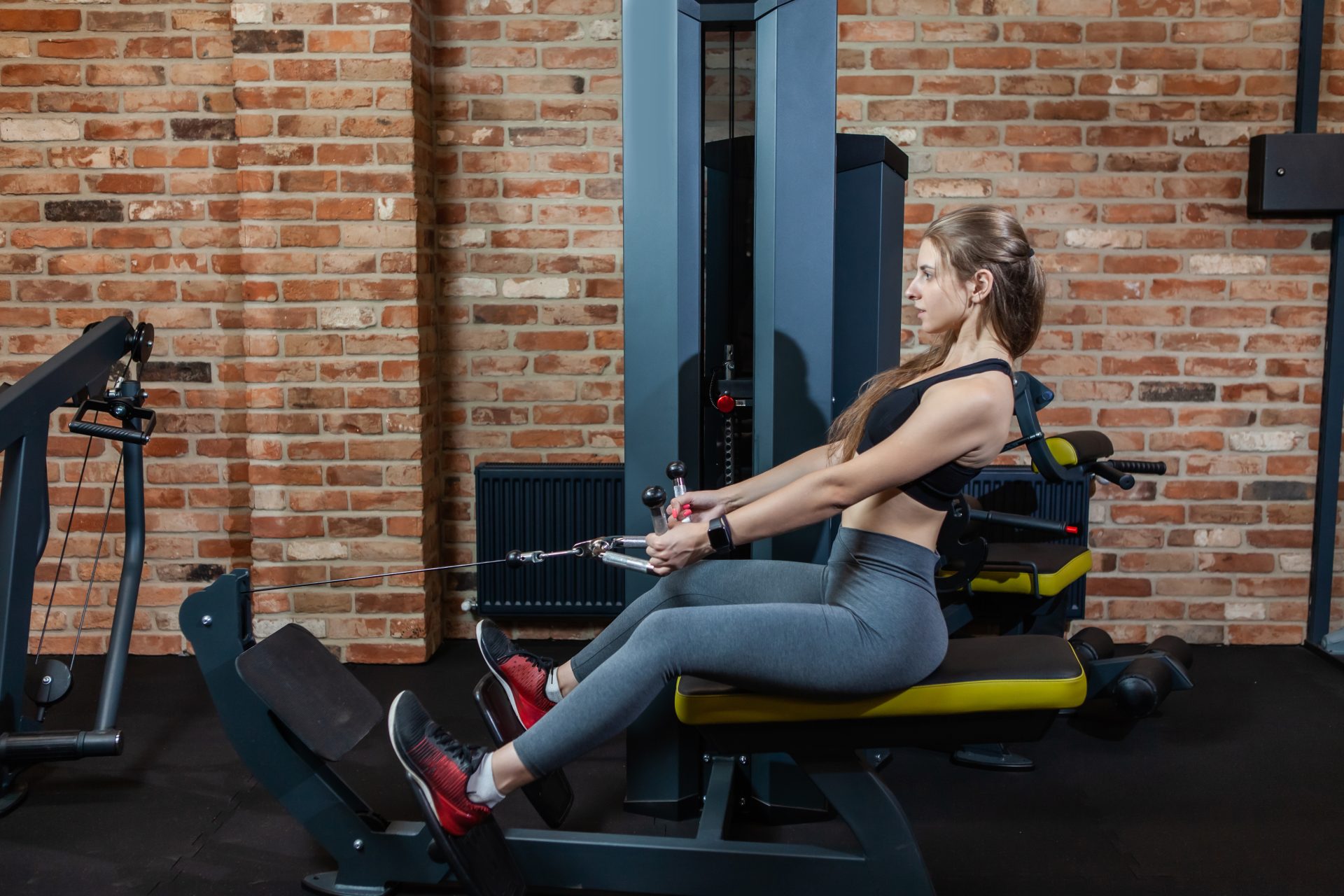
Here is a step-by-step instruction to do seated cable rows:

Sit on the machine’s seat and put your feet on the pedals. Next, bring the handles of the machine towards your chest.

Take a slight pause and slowly lower the handles to their original position.

seated row renegade row alternatives

When doing the exercise, ensure your back is straight, and the weight is bearable. You can add weight as you gain experience doing the seated cable rows.

4. Half-Turkish Get up

The Half-Turkish Get up is a full-body exercise that engages everything from your core, traps, shoulders, glutes, and hamstrings to quads.

Although this exercise takes time and expertise to advance, our summary of the Half-Turkish Get up will help you master it quickly.

Follow the given steps:

  • Lie on the floor using your back and outstretch one hand with a tightly gripped dumbbell.
  • Then, bend your knee and sit upwards using your second hand.
  • The last step is to raise yourself onto one knee.
  • Take a 5-second break and repeat the same steps 5-10 times.

5. Hollow Hold Dumbbell Press

The hollow hold dumbbell press provides all the benefits of the renegade rows without causing strain to your lower body.

This exercise also uses dumbbell weights to engage your shoulders, arms, core, and back.

Follow the given steps to master the hollow hold dumbbell press:

Lie down on your back and keep two dumbbells in your hand. Raise your legs in the air at a 45-degree angle.

Now slightly raise your shoulders and extend your arms when holding the dumbbells. Take a break and lower the weights slowly to reach the starting position.

Final Thoughts

The reason for the popularity of renegade rows is its double effect on building your back and strengthening the core.

However, there is still a need for more improvement in the renegade rows, so the above list of alternatives is perfect. The exercises mentioned above activate more comprehensive ranges of muscle groups all at once in comparison with renegade rows.

We hope you liked our choices of renegade row alternatives and incorporated them into your workout routines.

Vintage Boxing Gloves – In the Ring with Classic Style!

0

Do you love the grace and power that boxing represents? Do you have a passion for the classic style of vintage sports equipment? Then vintage boxing gloves may be just the thing for you!

For many sports enthusiasts, boxing has always been more than just a competition. It’s an art, a discipline, a way of life. And for gear, something needs to capture the essence of boxing, like vintage equipment. Classic gloves express style and heritage that is hard to replicate with modern gear.

Best Vintage Boxing Gloves

If you are a fan of the timeless beauty of classic sports equipment, then vintage boxing gloves should be on your bucket list. They look amazing and bring a unique feel and performance to your training or sparring sessions. In this article, we’ll explore everything you need to know to get started with boxing gloves from a bygone era. Let’s step back in time and discover the world of vintage boxing gloves!

Popular Vintage Glove Brands And Models

Vintage Boxing Gloves - In the Ring with Classic Style!

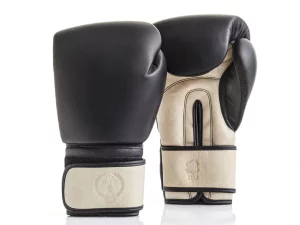
PRO BLACK/CREAM LEATHER BOXING GLOVES (STRAP UP) 

PRO BLACK/CREAM LEATHER BOXING GLOVES (STRAP UP) These are the perfect gloves for elite fighters who demand the best.

These gloves are made from 100% genuine cowhide leather and offer superior durability and maximum performance.

The triple-layer foam padding provides unmatched protection for your hands, while the double-stitched seams ensure these gloves stand up to even the toughest training sessions.

The logo on the wrist adds a touch of style to these already impressive gloves.

Product Features:

  • Crafted for elite fighters by third-generation boxing glove makers.
  • 100% genuine cowhide leather ensures maximum durability and performance.
  • Triple-layer foam padding provides superior hand protection.
  • Double stitched seams ensure durability and longevity.
  • THE MVP PRO Series logo on the wrist adds style and uniqueness.
  • Strap-Up design ensures a secure, comfortable fit.
  • Available in Black and Cream color options.
  • The perfect glove for professionals and amateur boxers.
  • Comes in various size options to fit all hand sizes.

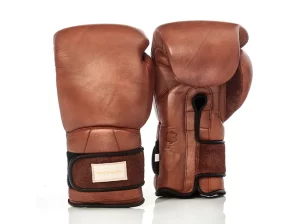
The ELITE HERITAGE BROWN LEATHER BOXING GLOVES (STRAP UP) 

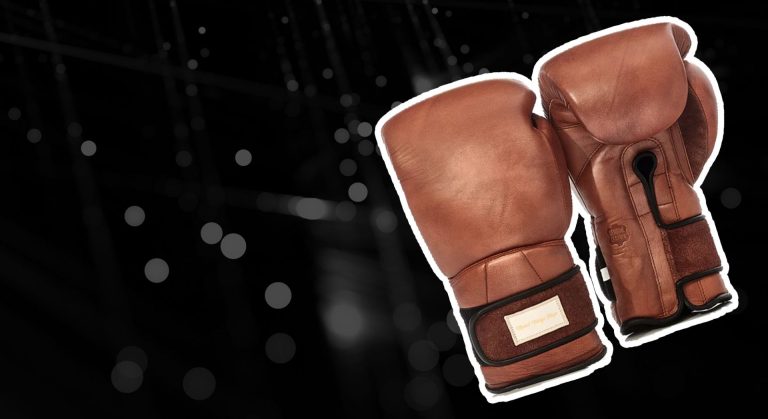
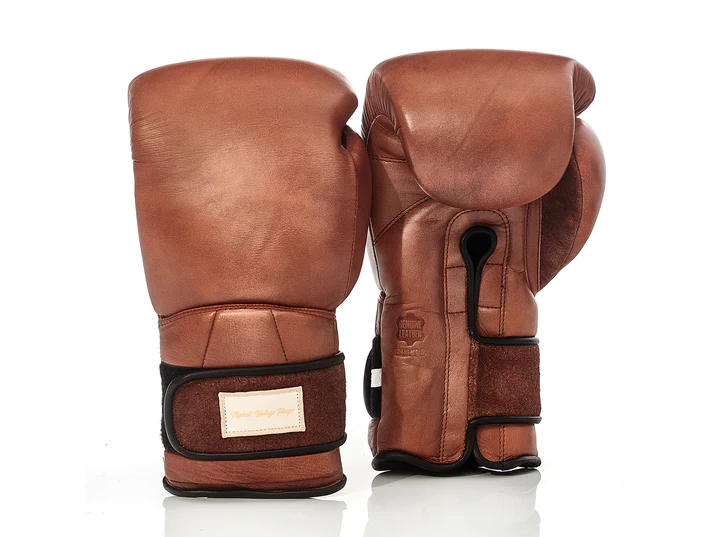
The ELITE HERITAGE BROWN LEATHER BOXING GLOVES (STRAP UP) These are an excellent addition to any boxer’s retro equipment collection.

Crafted from 100% genuine cowhide leather, these gloves feature a subtle suede leather contrast and a heat-embossed MVP logo on the wrist.

Built for both style and performance, these gloves are part of the MVP PRO Series and are expertly designed with triple-layer foam padding and double-stitched seams.

Product Features:

  • Triple-layer foam padding provides optimal shock absorption and added hand protection.
  • 100% genuine cowhide leather construction ensures maximum durability and longevity.
  • Heat embossed MVP logo on the wrist adds a touch of style and elegance.
  • Double-stitched seams ensure ultimate durability and longevity.
  • Subtle suede leather contrast adds a touch of sophistication.
  • Strap up for a secure fit during intense training sessions.
  • Ideal for boxing, kickboxing, MMA, and other combat sports.
  • Available in various sizes to ensure a perfect fit for all athletes.
  • A must-have addition to any boxer’s equipment collection.
  • Part of the MVP PRO Series – expertly designed for performance and style.

Liberlupus Boxing Gloves 

The Liberlupus Boxing Gloves are the ultimate training gloves for all boxing enthusiasts.

Made with high-quality faux leather and designed with three layers of foam padding, these gloves provide excellent protection and support for your hands during intense training sessions. The extra secure fit ensures the gloves stay in place during heavy bag work and sparring.

The gloves also feature breathable mesh that keeps your hands cool and comfortable, allowing you to focus on your training without any distractions. And when it’s time to clean the gloves, wipe them down with a wet towel for easy maintenance.

Product Features:

  • Made with premium quality faux leather.
  • 3 layers of foam padding for maximum protection and support.
  • Extra secure fit for optimal hand stability during workouts.
  • Breathable mesh material to keep your hands cool and comfortable.
  • Easy to clean with a simple wipe down using a wet towel.
  • Ideal for all boxing training, including heavy bag work and sparring.

PFG Vintage Boxing Gloves

PFG Vintage GlovesThe PFG Vintage Boxing Gloves are a must-have for any serious boxer or martial artist.

Made from the finest 100% genuine cowhide leather, these gloves provide superior durability and comfort, allowing you to train harder and longer.

Whether you’re hitting the heavy bag, sparring with a partner, or competing in the ring, these gloves will help you deliver your best performance every time.

Product Features:

  • Made from 100% genuine cowhide leather.
  • Classic vintage design with an old-school feel.
  • Multi-layered foam padding for maximum protection and shock absorption.
  • Breathable mesh palm to keep your hands cool and dry.
  • Hook-and-loop strap closure for a snug, comfortable fit.
  • Available in a variety of sizes.
  • Suitable for combat sports, including boxing, MMA, and Muay Thai.
  • Ideal for workouts, training, and competition.
  • Built to last, these gloves are designed to withstand the toughest workouts and opponents.

Vintage Boxing Gloves - In the Ring with Classic Style!

Some more popular vintage glove brands and models include:

Everlast – Everlast has been a well-known boxing equipment manufacturer making gloves for over 100 years. Some of their most popular vintage models include the Everlast No. 410, which Muhammad Ali used, and the Everlast No. 130, which Jack Dempsey used.

Stallion – Stallion is another popular vintage glove brand known for making high-quality gloves. Some of their most popular models include the Stallion Champion and the Stallion Marathon.

Spalding – Spalding has been a sports equipment manufacturer since the late 1800s. They made vintage boxing gloves that were popular in the early 1900s, such as the Spalding “Champion” model.

Rawlings – Rawlings is another sports equipment manufacturer that has been around for over a century. They made vintage boxing gloves that were popular in the mid-1900s, such as the Rawlings “Rumble” model.

Joe Louis – Joe Louis, the famous heavyweight champion, also had his line of vintage boxing gloves. His gloves were made by the Wright & Ditson company and were known for their high-quality craftsmanship.

These are just a few examples of the many vintage glove brands and models popular among collectors and enthusiasts. Each brand and model has unique features and history, making them a valuable part of boxing history.


Famous Fighters Who Used Vintage Boxing Gloves

There have been many famous fighters throughout history who used vintage boxing gloves. Some of the most notable include:

Jack Dempsey – Known as the “Manassa Mauler,” Dempsey was a heavyweight champion in the 1920s and was known for his aggressive fighting style. He used vintage boxing gloves made of horsehair and weighed around 8 ounces.

Rocky Marciano – Marciano was the only heavyweight champion to retire undefeated, with a record of 49-0. He used vintage boxing gloves made of horsehair and weighed around 8 ounces.

Sugar Ray Robinson – Robinson is regarded as one of the greatest boxers ever. He used vintage boxing gloves made of horsehair and weighed around 8 ounces.

Muhammad Ali – Ali was a heavyweight champion in the 1960s and 1970s and is considered one of the most significant and celebrated figures in boxing history.

Joe Louis – Known as the “Brown Bomber,” Louis was a heavyweight champion in the 1930s and 1940s. He used vintage boxing gloves made of horsehair and weighed around 8 ounces.

Importance Of Choosing The Right Gloves For Boxing

Choosing the right gloves for boxing is essential for several reasons:

Safety

The primary purpose of boxing gloves is to protect your hands and opponent from injury. Gloves that are too small or too large can increase the risk of injury, as they may not provide adequate protection or may slip off during a fight.

Comfort

Boxing gloves that fit well and comfortably can improve your performance during training and competition. Gloves that are too tight or loose can be distracting and uncomfortable, affecting your ability to throw punches and defend yourself.

Technique

The weight and style of boxing gloves can also impact your technique. Heavier gloves provide more resistance, which can help develop strength and endurance. Lighter gloves allow for greater speed and accuracy.

Competition rules

Different boxing organizations and competitions have specific rules about the type and weight of gloves that can be used. Choosing gloves that meet the competition regulations, you will be participating in is important.

Personal preference

Finally, preference is also a factor when choosing boxing gloves. Some boxers prefer gloves with more padding, while others prefer more lightweight gloves that allow for greater mobility.

Wrapping Up

Vintage boxing gloves provide the necessary protection in the ring and bring a classic and timeless style to any boxer’s equipment. From the intricate stitching to the unique designs, vintage gloves offer a unique piece of boxing history that cannot be replicated with modern equipment.

Whether you’re a seasoned veteran or just starting in the sport, adding a set of vintage gloves to your collection is a must-have for any boxing enthusiast.

So why not step into the ring with classic style and try out a pair of vintage boxing gloves today?


Best Exercises For Traps: Build Impressive Muscles

0

Have you been struggling to develop those strong and defined trapezius muscles? Despite putting in the effort at the gym, are you not seeing the results you desire? The problem may lie in your exercise routine.

The trapezius muscles, or traps, are an essential part of your upper body strength and posture. They not only enhance your overall physique, but also play a crucial role in stabilizing your shoulders and neck. However, finding the right exercises to target and effectively build these muscles can be a challenge for many fitness enthusiasts.

If you’re looking to enhance your traps and achieve that impressive, well-defined look, it’s crucial to incorporate the best exercises into your workout routine. Neglecting or performing incorrect exercises can lead to limited progress and wasted time.

To help you make the most out of your gym sessions, we have compiled a list of the absolute best exercises for bigger traps. Incorporating these exercises into your routine will help you develop strong, sculpted traps that will turn heads at the gym.

Anatomy Of The Trapezius Muscles

The trapezius muscles are large triangular muscles located on the upper back and neck. They are divided into three regions: the upper traps, middle traps, and lower traps. Understanding their anatomy will help you target them effectively during workouts.

The traps are involved in various movements, such as shoulder elevation, retraction, and rotation. Strong traps contribute to proper posture, shoulder stability, and injury prevention during activities like weightlifting, sports, and even everyday tasks.

Best Exercises for Traps

Essential Tips For Effective Trap Training

Before diving into your trap workout, it’s crucial to warm up the muscles and perform some dynamic stretches. This helps increase blood flow and flexibility, reducing the risk of injury.

  • Maintaining proper form and technique during trap exercises is paramount to prevent strain on the muscles and joints. It’s essential to understand the correct movement patterns and execute them with control.
  • Like any muscle group, the traps need progressive overload to grow and strengthen. Gradually increase the intensity of your workouts by adding weight, increasing repetitions, or using advanced variations to continue challenging the muscles.
  • Allowing sufficient rest and recovery is crucial for muscle growth and overall performance. Adequate sleep, proper nutrition, and scheduling rest days in your training program will ensure optimal trap development.

Best Exercises For Lower Traps

Barbell Shrugs

Barbell shrugs target the upper traps effectively. To perform barbell shrugs, stand with your feet shoulder-width apart, holding a barbell in front of your thighs with an overhand grip. Keeping your arms straight, elevate your shoulders as high as possible, hold for a moment, and then slowly lower the weight back down. Focus on squeezing your traps at the top of the movement for maximum activation.

Barbell shrugs can be performed using different grips, such as the wide grip or snatch grip, to target the traps from different angles. Additionally, using dumbbells or a trap bar offers alternative options.

Ensure a full range of motion, avoid using momentum, and focus on the contraction of the traps at the top of the movement. Consider incorporating pauses or tempo variations to increase time under tension and maximize muscle engagement.

Dumbbell Shrugs

Similar to barbell shrugs, dumbbell shrugs target the traps but allow for a greater range of motion and individual control. Stand with your feet shoulder-width apart, holding a dumbbell in each hand with a neutral grip. Keep your arms straight and raise your shoulders up towards your ears. Hold the contraction for a second and then lower the dumbbells back down. Dumbbell shrugs are particularly effective for isolating and strengthening the traps.

Dumbbell shrugs allow for a greater range of motion compared to barbell shrugs. They also improve grip strength and activate stabilizer muscles, contributing to overall shoulder development. If dumbbells are not available, you can use kettlebells, resistance bands, or even a loaded backpack to perform shrugging movements.

Upright Rows

Upright rows are a compound exercise that targets not only the traps but also the deltoids and upper back muscles. Stand with your feet shoulder-width apart, holding a barbell or dumbbells in front of your thighs with an overhand grip. Pull the weight straight up towards your chin, leading with your elbows. Keep the weights close to your body and focus on contracting your traps at the top of the movement. Avoid excessive shoulder elevation or using momentum.

Upright rows primarily target the middle traps and lateral deltoids. They also engage the biceps and upper back muscles, contributing to overall upper-body strength and stability.

Individuals with shoulder impingement issues should exercise caution or consider alternative exercises. Using an EZ-curl bar or performing upright rows with dumbbells can be less stressful on the shoulders.

Farmer’s Walk

While primarily considered a grip and core exercise, the farmer’s walk is also an excellent way to engage the traps. Grab a pair of heavy dumbbells or kettlebells and walk for a designated distance or time. The weight carried puts a significant demand on your traps as they stabilize your shoulders and upper back. Make sure to maintain an upright posture throughout the exercise, and focus on squeezing your traps to maximize the benefits.

Farmer’s walks can be performed with various equipment, including dumbbells, kettlebells, or even loaded farmer’s walk handles. Adjust the weight according to your fitness level and gradually increase it as you progress. In addition to developing strong traps, farmers’ walks improve grip strength, core stability, and overall muscular endurance.

Best Exercises for Traps

Face Pulls

Face pulls are an excellent exercise for targeting the rear delts, rhomboids, and traps. Attach a rope or band to a cable machine at chest height. Stand with your feet shoulder-width apart, grab the rope with a neutral grip, and step back to create tension. Pull the rope towards your face, leading with your elbows and squeezing your shoulder blades together. Focus on engaging your traps and maintaining good posture throughout the movement.

Face pulls target the rear delts and upper traps, helping to counterbalance the effects of forward-rounded shoulders and poor posture. They also strengthen the rotator cuff muscles, promoting shoulder stability.

You can perform face pulls using resistance bands or TRX straps if a cable machine is not available. Adjusting the height of the attachment point or using different grips can provide variations in muscle activation.

Supplementary Exercises For A Complete Trap Workout

If you’re looking to bring serious definition and strength to your traps, then you need to incorporate supplementary exercises into your trap workouts.

While exercises like shrugs are great for targeting the traps, adding in additional exercises can help to fully work the muscles and achieve your desired results. Here are some supplementary exercises for a complete trap workout.

Dumbbell High Pulls

Dumbbell high pulls are an excellent exercise for targeting the traps and also engaging the deltoids and back muscles. To perform this exercise, start by standing with your feet shoulder-width apart, holding a dumbbell in each hand.

Then, bend your knees slightly and lean forward with your back straight. Pull the dumbbells up towards your shoulders, leading with your elbows, and then lower them back down. Aim for 3 sets of 12-15 reps.

Cable Pull-Downs

Cable pull-downs are another effective exercise for working the traps. Start by attaching a straight bar or rope handle to a high cable pulley. Stand facing the machine, with your feet shoulder-width apart and your knees slightly bent.

Grasp the handle with an overhand grip and pull it down towards your thighs, squeezing your shoulder blades together as you do so. Slowly release the tension and repeat for 3 sets of 12-15 reps.

Wide Grip Pull-Ups

Wide grip pull-ups are a compound exercise that targets the lats, shoulders, and traps. Find a pull-up bar and grasp it with an overhand grip, wider than shoulder-width apart. Hang from the bar with your arms fully extended and then pull your body up until your chin clears the bar. Lower your body back down with control and repeat for 3 sets of 8-12 reps.

Reverse Flyes

Reverse flyes primarily target the rear deltoids, but they also engage the traps. Start by standing with a dumbbell in each hand, palms facing inwards. Slightly bend your knees and lean forward with your back straight. Lift your arms out to the sides, squeezing your shoulder blades together as you do so. Slowly lower the dumbbells back down and repeat for 3 sets of 12-15 reps.

Overhead Press

The overhead press is an excellent compound exercise that not only works the shoulders but also engages the traps. Start by standing with your feet shoulder-width apart, holding a dumbbell or barbell at shoulder height. Press the weight overhead, extending your arms fully. Lower the weight back down to shoulder height and repeat for 3 sets of 8-12 reps.

Best Exercises for Traps

Conclusion

Building the traps muscles is a great way to improve your posture and make your body look amazing. All of the exercises recommended in this article can help you reach the goal of having toned and strong traps. Proper form and guidelines should be followed for each exercise to ensure good posture and to reduce any risk of injury.

Additionally, you can adapt the exercises listed here to tailor it to your own strength level or fitness goals. Start out small with lighter weights and build momentum as the muscles build up over time. No matter what approach you take toward getting toned traps, it’s important to be persistent and consistent with your routine if you want to see results.

Anyone who puts in the effort and sticks to a routine can see amazing results with their traps before long.

Natalia Dyer Workout Routine

0

Natalia Dyer is an actress well-recognized for her role as Nancy Wheeler in the Netflix series Stranger Things. She has also been in other famous movies like Hannah Montana the Movie. Her powerful acting is the reason behind her worldwide recognition and fame.

It’s not only her acting that has inspired an audience of millions.

She is also admired for her well-toned and slim body figure that her female fans aspire to have. She works hard to maintain her fantastic figure, and her diet consisting of a lot of sushi assists in this journey. How tall is Natalia Dyer?

To get detailed insight into her diet plan and workout regime, you must follow this article until the end.

Natalia Dyer Workout Principle:

She prioritizes being physically active daily to keep her body figure fully toned. Her daily schedule is complete, with a period selected for some physical activity. She feels a sense of happiness when in the gym. Moreover, she loves yoga and conserves her time for this from her busy routine.

Even though she is not a fan of hardcore gym-oriented exercises, she ensures to rely on a simple workout routine of 40-60 minutes that targets every aspect of fitness. Her workout routine focuses on keeping her in great shape and maintaining her endurance, strength, and overall physical and mental well-being.

Natalia Dyer’s Current Fitness Stats:

Natalia Dyer’s workout regime helps to attain the ideal stats. Her current fitness stats are the proof of it, incredible enough to call it the ideally toned body figure.

  • Natalia Dyer Height: 5ft 4 inches
  • Natalia Dyer Weight: 49kg
  • Breast: 30 inches
  • Waist: 22 inches
  • Hips: 31 inches

Her balance workout schedule and diet plan parallel get her to this perfect body. Millions of her fans desire to acquire a body figure just like hers.

Natalia Dyer’s Workout Routine:

Natalia Dyer is genetically slim and skinny. However, she has never taken these genes for granted. She has a planned workout routine to keep herself active and energetic to maintain her slim figure. Many other celebrities like Ariana Grande also plan their workout regime to keep themselves lively. In addition, her workout plans consist of yoga and outdoor activities like hiking and long walks.

Undoubtedly, staying active and dynamic every day is essential as sticking to a healthy diet plan. The main goal for Dyer’s workout is to stay energetic all day long. Moreover, Dyer workout five times a week. This five-times-a-week workout plan includes high-intensity exercise. A high-intensity activity that uses one’s body weight for resistance.

High-intensity workouts focus on burning excess body fat. The main thing with high-intensity exercise is increasing the heart rate. Thus, it becomes a way to step into a cardio workout. Natalia Dyer’s perfect physique is the result of these strenuous workout plans. However, Dyer loves doing yoga. She also prefers to go for yoga on rest days as well.

Here is the routine of Natalia Dyer, which is the true secret behind her slim and toned body physique:

Natalia Dyer’s Yoga Workout:

For Natalia Dyer, Yoga has proved to be the reason behind her flexible and athletic body figure. Moreover, including yoga in your daily schedule makes you mentally stable. Thus, Natalia Dyer makes sure to spare some time from her busy routine for yoga to keep herself mentally healthy.

Natalia Dyer loves to do yoga. She prefers to do it over other things when she gets free in her busy life. She makes sure to do yoga 4-5 times a week.

Natalia Dyer High-Intensity Workout:

Natalia Dyer’s high-intensity workout session is in 2- 3 sets. It includes more than 16 different exercises, making it a high-intensity workout.

  • Burpees (2-3 sets of 20-30 seconds)
  • Jump squats (2-3 sets of 20-30 seconds)
  • Pike push-ups (2-3 sets of 20-30 seconds)
  • Low plank (2-3 sets of 20-30 seconds)
  • High plank (2-3 sets of 20-30 seconds)
  • Wall bridges (2-3 sets of 20-30 seconds)
  • Superman (2-3 sets of 20-30 seconds)
  • Push-ups (2-3 sets of 20-30 seconds)
  • Cross punches (2-3 sets of 20-30 seconds)
  • Wide push-ups (2-3 sets of 20-30 seconds)
  • Squats jack (2-3 sets of 20-30 seconds)
  • Lunges (2-3 sets of 20-30 seconds)
  • Inchworm (2-3 sets of 20-30 seconds)
  • High plank leg lifts (2-3 sets of 20-30 seconds)
  • Wide push-ups (2-3 sets of 20-30 seconds)
  • Jumping jacks (2-3 sets of 20-30 seconds)

Natalia Dyer’s figure might not be like models, but you can get to new heights if you follow her workout regime.

Tracking her workout plan will contact you nearer to a healthy lifestyle. Moreover, it will let you achieve a toned and lean body figure.

Natalia Dyer’s Diet Plan:

Natalia Dyer loves sushi. Sometimes, she eats it twice daily for lunch and dinner. No doubt, fish is the most healthy protein source. For a nutritious diet, consuming it three times a week is essential.

For breakfast, Natalia Dyer likes to take avocado with toast before she gets ready for her busy day.

On regular days, she ensures a healthy and organic food intake. She makes sure that the food she consumes is clean and hygienic. Other than this, she is also a burger lover.

Besides her workout regime, her diet plan contributes to her toned physique. She has never been a binge eater. However, she always ensures that the food she takes fulfills her nutrient requirements.

Here is the detailed diet plan of Natalia Dyer:

Meal 1: Breakfast

  • Toast
  • Avocado
  • Coffee

Meal 2: Lunch 

  • Burger
  • Sushi

Meal 3: Dinner 

  • Sushi

Natalia Dyer’s Supplements:

Natalia Dyer’s supplements list doesn’t have plenty of items. She takes supplements for the nutrients that sometimes become difficult to intake through diet. And those are listed below:

  • Multivitamins
  • Biotin
  • Vitamin E

Apart from body requirements, she intakes these supplements to keep her nails, hair, and skin on point. These supplements are the reason for her radiant and shiny skin.

Final Thoughts:

Here you get a detailed insight into Natalia Dyer’s workout routine. It would help if you kept in mind that you need to be consistent with all the plans with workout sessions and a healthy diet to get in the perfect toned figure.

It will gradually take you to your desired point. Natalia Dryer’s workout plan can assist you in this journey. So give it a try and see how your body transforms.